Watch the video above for a guided demonstration of each exercise.
A strong core is essential for more than just appearance, it plays a central role in balance, stability, posture, and overall movement. The core includes both deep stabilizing muscles that support the spine and larger muscle groups responsible for movement and power.
In this session, NASM Certified Personal Trainer and Certified Nutrition Coach Chelsea Brubeck demonstrates a series of core-focused exercises designed to target both local and global core muscles. This is a demonstration-style workout, allowing you to learn proper form and incorporate these movements into your routine.
How to Approach This Workout
This routine is designed to be simple, effective, and adaptable:
- Perform each exercise for 30 seconds
- Move through the full circuit 2–3 times for a longer workout
- Rest as needed between exercises or rounds
- Focus on control, breathing, and core engagement
These exercises can be done anywhere, with or without added weight.
The Exercises
Below is a breakdown of each movement demonstrated in the video, along with key technique cues:
High Knee Lifts
Lift one knee at a time toward your chest while maintaining an upright posture. For an added challenge, hold a weight overhead. This movement engages deep core stabilizers and supports balance.
Crunches
Lift your shoulders slightly off the ground using your abdominal muscles while keeping your lower back supported. Focus on controlled movement rather than pulling on your neck.
Bicycle Crunches
Alternate bringing opposite elbow to knee in a pedaling motion. This exercise engages the abdominals, obliques, and hip flexors for a more dynamic core movement.
Side Taps (Heel Touches)
With your shoulders slightly lifted, reach side to side toward your heels. This targets the obliques, which help with rotational strength and posture.
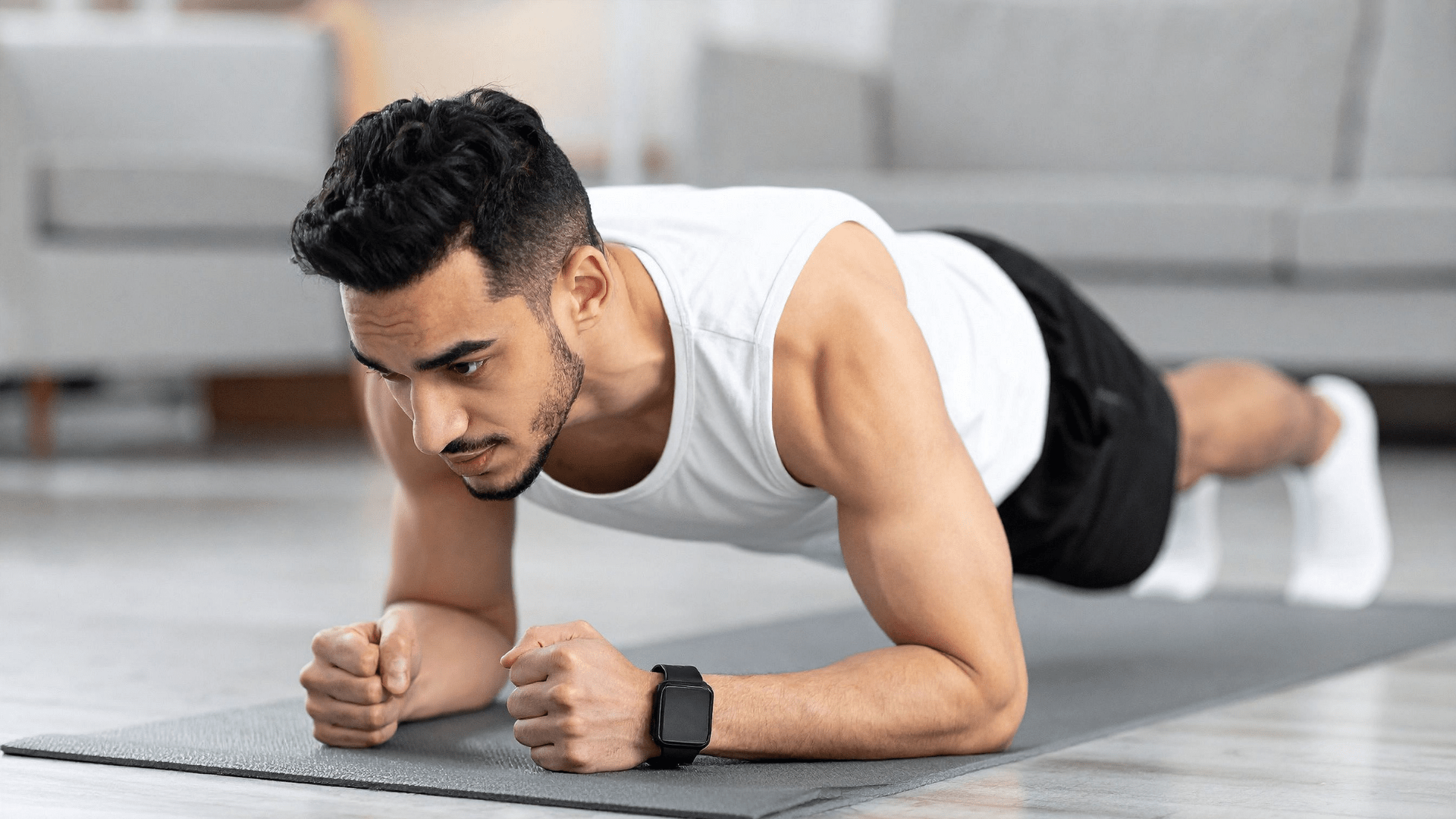
Elbow Plank
Hold a stable plank position on your forearms, keeping your body in a straight line. Engage your core and avoid letting your hips drop or lift too high.
Plank Up-Downs (Optional)
Move between a forearm plank and a high plank position. This variation increases both core and upper body engagement for an added challenge.
Why Core Strength Matters
Core strength supports nearly every movement you make. It plays an important role in:
- Balance and stability
- Posture and spinal support
- Injury prevention, especially for the lower back
- Efficient movement and coordination
A strong core also helps support other forms of exercise, including both upper and lower body strength training.
Explore our upper body workout routine here.
Explore our lower body workout routine here.
Together, these routines help build a well-rounded strength program. Learn more about how to structure your weekly exercise regimen here.
Key Reminders
- Keep breathing throughout each movement
- Engage your core, avoid relying on momentum
- Move with control, especially during transitions
- Modify as needed to match your fitness level
- Prioritize form over speed or intensity
The Takeaway
Core training is about more than isolated abdominal work, it’s about building the stability and control that supports everything else you do. From improving posture to reducing strain on your lower back, a strong core helps you move more efficiently and confidently throughout the day.
By incorporating short, consistent core sessions like this one, you can build a solid foundation that enhances both strength training and everyday movement.
Please consult your physician before engaging in this workout to ensure that you perform the movements safely and in a manner which will not negatively impact your health. You are engaging in this workout at your own risk. Clients assume responsibility for all injury including but not limited to muscle tears or fractures. This content is offered for educational and informational purposes only.
By Alicia Barber Minteer, PhD
Leave a Reply