Beneath the Surface: Using Skin Biopsy to Accurately Diagnose Parkinsonian Disorders
For decades, clinicians have relied primarily on expert observation, detailed histories, and the slow passage of time to diagnose Parkinson’s disease and related parkinsonian disorders. Yet these conditions often look remarkably similar in their early stages, making accurate diagnosis challenging, and in many cases, delayed. Today, a new wave of diagnostic innovation is emerging, and one tool in particular is reshaping the landscape: the Syn-One Test, a skin biopsy designed to detect disease-driving proteins beneath the surface.
Dr. Jonathan Isaacson, lead investigator of the three-year clinical utility study which evaluated this technology, explains why improved accuracy is so urgently needed. Historically,
“we didn't have good ways of identifying Parkinson's disease and Parkinson's related conditions outside of a clinical examination, based on clinical symptoms.”
The Challenge of Early and Accurate Diagnosis
Parkinson’s disease can take years to fully declare itself, and related disorders often present with overlapping symptoms. As Dr. Isaacson notes, when researchers evaluated how accurate clinicians were in the first years of disease onset, “they found that really only 60% of the diagnoses made in the first five years are accurate.” Many patients’ diagnoses shift over time as new symptoms emerge.
The challenge is even greater for atypical parkinsonian conditions—such as multiple system atrophy (MSA), Lewy body dementia (LBD), progressive supranuclear palsy (PSP), and corticobasal degeneration (CBD).
Dr. Isaacson explains that “in the atypical forms, many patients can carry the wrong diagnosis throughout their disease course,” and even when brains are evaluated after death, “almost 20% of patients had the wrong diagnosis in some of these atypical forms of Parkinson's.”
This level of diagnostic uncertainty affects not only care but also research progress. Over the past two decades, the field has intensified its push toward better diagnostic tools and biological markers that can reveal what’s happening long before symptoms fully develop.
The DAT Scan: Helpful, But Limited
The first major diagnostic tool to reach U.S. clinics was the DAT scan, which images dopamine transporters in the brain. A reduction in dopamine transporter activity is a hallmark of parkinsonian disorders. According to Dr. Isaacson, this scan lets clinicians “visualize dopamine transporters in the brain and see a diminishment… in the disease course of these conditions.”
While DAT scans can distinguish degenerative parkinsonism from conditions like drug-induced parkinsonism or essential tremor, they cannot identify the type of parkinsonian disorder. As Dr. Isaacson explains:
“Any type of condition that causes Parkinsonism will have a diminishment in the dopamine transporters… Lewy body dementia, Parkinson's, multiple system atrophy, PSP, all have lower dopamine in the brain.”
So although DAT scans remain valuable in certain scenarios, they leave an important diagnostic gap.
Introducing the Syn-One Test: Detecting Disease in the Skin
In recent years, a groundbreaking diagnostic tool has entered clinical practice: the skin biopsy test for phosphorylated alpha-synuclein, the abnormal protein found in Lewy bodies and present in conditions like Parkinson’s disease, DLB, and MSA.
Dr. Isaacson describes the technique:
“What the skin biopsy does is it looks for a phosphorylated alpha-synuclein in the nerve fibers of the skin.”
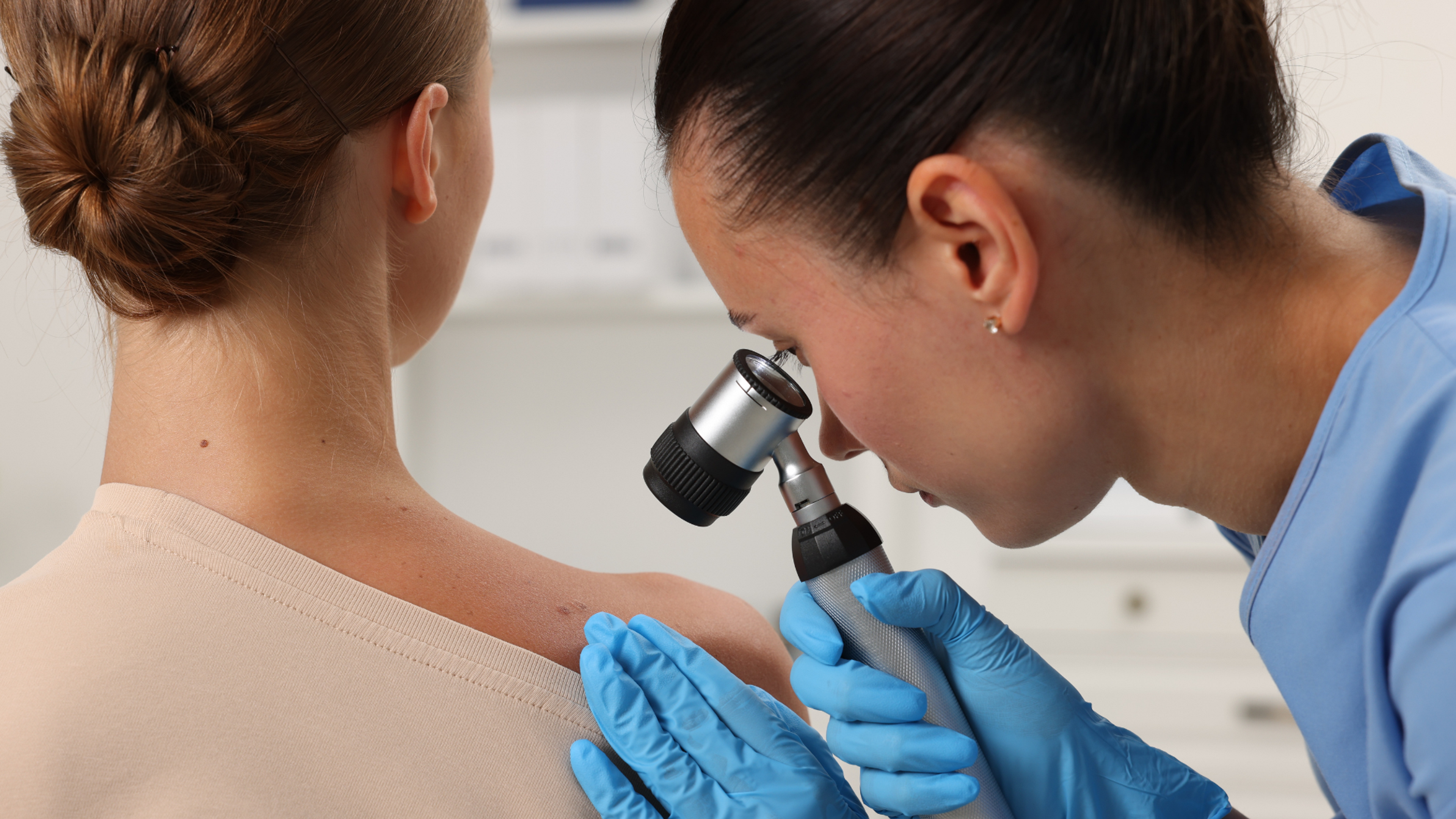
Using a simple biopsy at three body locations, clinicians can examine whether this abnormal protein—synuclein—is accumulating in peripheral nerve fibers.
He explains the significance of this discovery:
“…looking for synuclein deposition, or that abnormal protein, that we see in the Lewy bodies in the brain, that we can identify in the periphery of the skin.”
This means physicians can now detect the same disease markers found in the brain, but from an accessible area of the body, without months or years of waiting for more symptoms to appear.
Diagnosing Earlier and More Precisely
One of the most exciting aspects of this technology is its potential to identify these disorders before full clinical symptoms arise. Skin biopsy may eventually help identify individuals in the prodromal period, when subtle signs may appear before classic motor symptoms.
Dr. Isaacson notes the field’s hope that skin biopsy “can help identify patients even in the prodromal period, if they carry synuclein prior to even having presentation of their symptoms.”
This opens doors not just for earlier diagnosis, but for groundbreaking research. He adds that the biopsy may help scientists “better understand how synuclein deposition takes place and how it advances as the disease advances.”
Patterns of Synuclein Deposition: Differentiating Disorders
In addition to detecting synuclein, researchers are studying how the location and quantity of deposition differ across conditions. Dr. Isaacson describes this ongoing work:
“They've done studies looking at if we can differentiate these diseases based on not just location of the synuclein deposition, but on the quantity… and the kind of pattern that the synuclein is deposited in the three locations.”
For example: Parkinson’s disease “has a higher concentration of synuclein deposition in the cervical region… behind the neck.” While in Multiple system atrophy (MSA), the pattern is “about equal in all three locations,” without a pronounced concentration in the cervical region.
These emerging patterns add valuable new tools for clinicians who previously had little more than clinical observation to rely on.
Why an Accurate Diagnosis Matters
Precise diagnosis affects every aspect of care—from choosing the right medications to deciding which clinical trials are appropriate. As Dr. Isaacson emphasizes:
“Patients deserve to have the right diagnosis of their condition so they have the right treatment… and they're better able to be on the right medications or the right clinical trial or to better understand their disease course.”
He further notes the importance of taking these conditions seriously and thoroughly evaluating them:
“Just like if you break your arm, you would get a x-ray. Just like if you have a stroke, you get an MRI… we should have a thorough workup to better understand and diagnose these conditions.”
Toward Precision Medicine in Parkinsonian Disorders
Parkinson’s disease and related conditions are extraordinarily varied. No two patients look or progress exactly alike. That variability underscores the need for individualized care.
Dr. Isaacson puts it succinctly:
“If you treat one patient with Parkinson's disease, you're treating one patient with Parkinson's disease.”
Each case is unique, and diagnostic clarity is the first step toward personalized, effective treatment.
The Syn-One Test marks a major advancement in that direction. By bringing biological markers to the surface, literally, it allows clinicians and researchers to see what was once hidden deep in the brain. As this technology evolves, it has the potential to transform patient care, accelerate research, and ultimately bring us closer to disease-modifying therapies.
To learn more about the Syn-One Test, watch our full conversation with Dr. Jonathan Isaacson in the video above.
By Alicia Barber Minteer, PhD
Disclaimer
The Video and Written Educational Content included on this site is not intended to be a substitute for professional medical advice, diagnosis, or treatment. Always seek the advice of your physician or other qualified health provider with any questions you may have regarding a medical condition. Never disregard professional medical advice or delay in seeking it because of something you have read or seen on the Site.
The information contained in the Educational Content posted represents the views and opinions of the individual in the recording and does not necessarily represent the views or opinions of IND. The mere appearance of Educational Content on the Site does not constitute an endorsement by IND or its affiliates of such Content.
The Educational Content has been made available for informational and educational purposes only. IND does not make any representation or warranties with respect to the accuracy, applicability, fitness, or completeness of the Content. IND does not warrant the performance, effectiveness or applicability of any sites listed or linked to in any Content. IND hereby disclaims any and all liability to any party for any direct, indirect, implied, punitive, special, incidental or other consequential damages arising directly or indirectly from any use of the Content, which is provided as is, and without warranties.